Mahmoud Hessabi: Biography of Iran’s Father of Modern Physics – Doppler Magazine
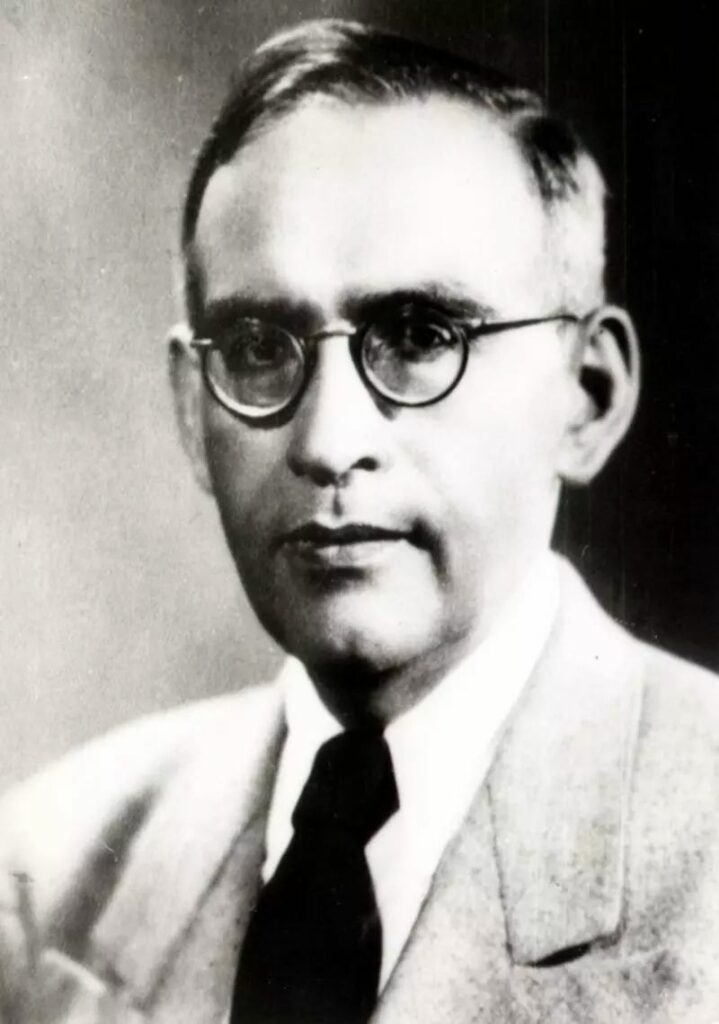
Dr. Mahmoud Hessabi is recognized as one of the founders of academic physics in Iran. His efforts during his professional career in government and at the University of Tehran played a pivotal role in establishing and advancing this field across Iranian universities. This article provides a concise overview of Hessabi’s biography and achievements, while also addressing some controversial claims surrounding him.
Birth and Childhood
Mahmoud Hessabi was born on March 23, 1903 in Tehran. His parents were originally from Tafresh. According to the book “Master of Love”, which contains the biography of this prominent professor written by Iraj Hessabi, Hessabi’s childhood home was located in Shahpur Square (now Islamic Unity Square) in the Ghavam al-Dowleh market area, near the Armenian Church.
🔗 بیشتر بخوانید: نوآوریها و تکنولوژیهای تازه در موبایلهای سامسونگ
His grandfather, Ali Moezz al-Saltaneh, known as Haj Yamin al-Molk, was a member of the cabinet under Abdolhossein Farmanfarma. His father, Abbas Moezz al-Saltaneh, also served in the government.
During his childhood, Hessabi’s family moved to Sham (modern-day Syria and Lebanon) due to his father’s assignment. They resided at the Iranian embassy in Beirut, then under Ottoman rule. After a while, his father returned to Iran, but Mahmoud stayed in Beirut with his mother and brother to attend European-style schools.
🔗 بیشتر بخوانید: آنر واچ ۴ پرو با eSIM و عمر باتری ۱۰ روزه معرفی شد + مشخصات و قیمت
[[OAR_MEDIA_1]]
Education of Mahmoud Hessabi
Hessabi studied at the French Missionary School in Beirut. Although it was a boarding school, he and his brother arranged to attend as day students, where they became fluent in French.
He then enrolled at the French University of Beirut, completing foundational courses in literature and biology, graduating at age 19. For higher education, he chose civil engineering and earned his degree from the American University of Beirut at 22. He subsequently worked for a French engineering firm.
[[OAR_MEDIA_2]]
Migration to France
His brother Mohammad briefly returned to Iran to work at the Ministry of Roads and Transportation. The two brothers secured a scholarship from the Iranian government. Around the same time, Hessabi’s French employer transferred him to their Paris headquarters.
Thus, both brothers moved to Paris. They initially pursued basic sciences, and Hessabi continued his physics studies in France until age 25.
[[OAR_MEDIA_3]]
Return to Iran
After completing his physics education, Hessabi returned to Iran and joined the Ministry of Roads and Transportation.
According to sources in the Islamic Consultative Assembly’s digital library, Hessabi served as a senator in the first, second, and third terms of the Iran Senate. Precise details of his tenure are scarce. The first Senate spanned 1949-1952, the second 1953-1959, and the third 1960-1961.
Additionally, Mahmoud Hessabi served as Minister of Culture in Prime Minister Mohammad Mosaddegh‘s first cabinet from December 3, 1951 to July 5, 1952.
Following the establishment of the University of Tehran, Professor Hessabi headed the Faculty of Engineering and played a prominent role throughout his life in solidifying physics education and research at the University of Tehran and nationwide.
Many colleagues have stated that teaching and establishing modern physics in Iran stands as Professor Mahmoud Hessabi’s greatest achievement.
Dr. Mahmoud Hessabi passed away on September 3, 1992 in Geneva, Switzerland. His mausoleum lies beside other family members in the city of Tafresh.
[[OAR_MEDIA_4]]
Achievements of Mahmoud Hessabi in Iran
Numerous accomplishments are attributed to Mahmoud Hessabi, including founding the first tribal schools, establishing the Higher Institute of Learning, setting Iran’s official time, and more.
However, many critics have condemned exaggerations in Hessabi’s biographies. Two particularly controversial claims stand out, examined below.
[[OAR_MEDIA_5]]
Mahmoud Hessabi, Einstein’s Only Iranian Student
In “Master of Love”, Hessabi is quoted as saying:
“I presented several theories in my physics research. One concerned photoelectric cell sensitivity, another the passage of light near matter, and the last the theory of infinite particles. I needed to discuss these with physics professors, so I traveled across Europe meeting scientists like Bohr, Fermi, Born, Dirac, and Schrödinger. They suggested I consult Professor Einstein due to my theories’ complexity.”
“Master of Love”, Iraj Hessabi
The account continues that Hessabi was selected as one of five individuals permitted to sit in Einstein’s presence. Einstein reportedly said he had been pondering Hessabi’s theory for a month and predicted it would revolutionize physics in the near future.
Such writings appear exaggerated. Nevertheless, many sources refer to Hessabi as Einstein’s sole student. The reality seems to be that Hessabi met Einstein only once, briefly, at a public gathering.
Another point is the reference to the “infinite particles” theory. Two short articles by Hessabi on particle physics exist. The first, “Constant Particles”, published in English in 1947, examines a particular solution to Maxwell’s equations within general relativity. The second, “Infinite Atom Model”, appeared in a French journal in 1957.
Another article, “Theoretical Evidence for the Existence of a Light-Charged Particle with Mass Greater than the Electron”, was published in English in 1948.
[[OAR_MEDIA_6]]
Mahmoud Hessabi, Founder of the University of Tehran
Another major claim credits Hessabi with founding the University of Tehran. “Master of Love” states Hessabi convinced Reza Shah to build the university, after which the Shah ordered him to draft a plan based on Parisian universities.
Many familiar with Hessabi’s life dispute this. According to the University of Tehran’s website, Hessabi proposed a comprehensive central university plan to then-Minister of Culture Dr. Ali Asghar Hekmat in 1928.
In reality, the university’s establishment should be credited to figures like Ali Asghar Hekmat, Ali Akbar Siassi, Isa Sadiq, and others in the early 1930s. These individuals documented the founding process and their efforts in detail, with no mention of Hessabi.
For instance, contrary to the above narrative, the university was not modeled on French institutions. Isa Sadiq traveled to the United States in 1931 to present a plan based on American universities. He detailed his efforts in the books “One Year in America” and “Memoirs of a Lifetime”.
[[OAR_MEDIA_7]]
Final Words
This article reviewed Professor Mahmoud Hessabi’s biography. After studying physics in France, Hessabi returned to Iran and served in government agencies, rendering valuable services. He also played a role in launching and consolidating modern physics at the University of Tehran, helping popularize the discipline in Iran.
Today, numerous fabricated or exaggerated achievements are attributed to him. These claims not only fail to elevate Hessabi’s genuine historical standing but, as they are exposed, inflict irreparable damage on the reputation of this prominent national figure.
Frequently Asked Questions
They met once during a public gathering and spoke briefly. However, claims that Hessabi was Einstein’s student or colleague are unfounded.
The story attributing the university’s founding to Hessabi is inaccurate. The founders were individuals like Ali Asghar Hekmat, Ali Akbar Siassi, and Isa Sadiq. They documented the university’s establishment and their efforts, with no trace of Hessabi’s involvement.
He was presumably interested in these subjects and studied them, but was not a specialist in any.
Categories